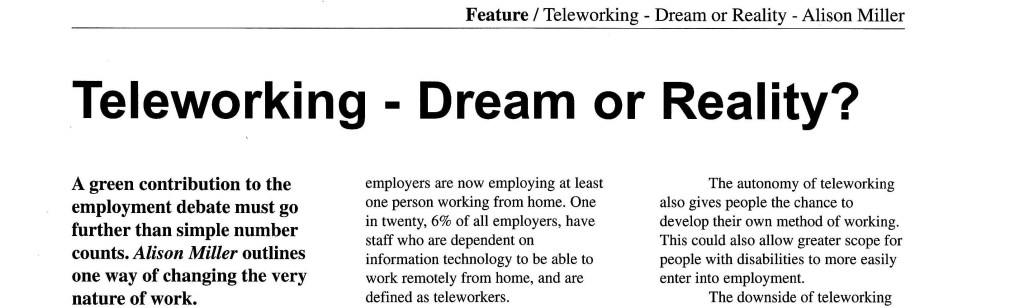
As an economist and technologist, Alison contributed to a number of publications. One of her professional interests was in Teleworking. In 1996 she outlined her vision in the environmental journal New Ground. While broadly in favour of Teleworking, she expressed some reservations.
Then Alison stepped away from the corporate world to successfully complete a Master of Fine Arts in Creative Writing at Kingston University in 2017. While still a student, her first piece of published fiction writing, ‘The Reckoning’ appeared in Aestas 2014 an International Literary Anthology published by Fabula Press.
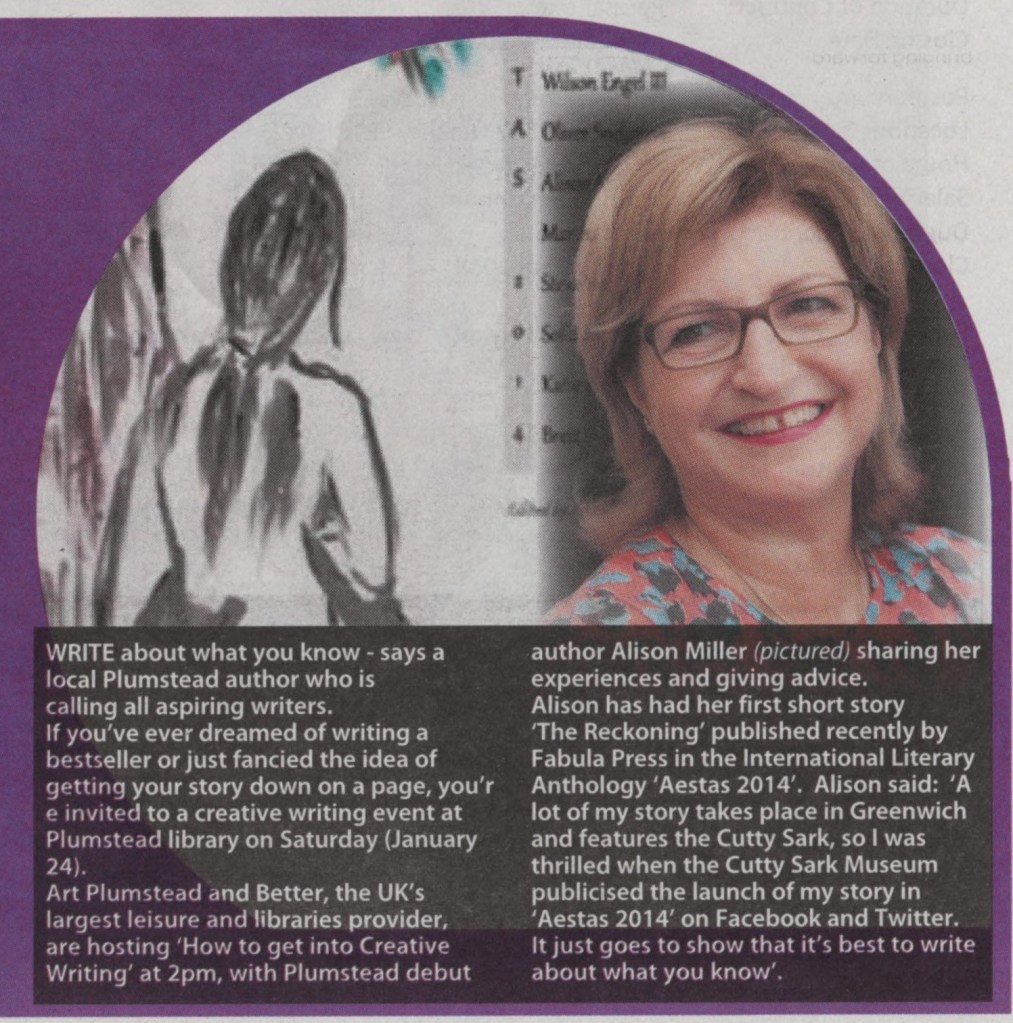
After the publication of ‘The Reckoning’ Alison was invited by Better the leisure and libraries provider to lead a creative writing event to encourage and inspire other writers in South East London where she lives.
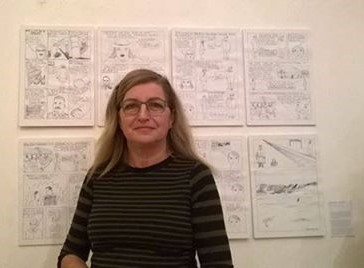
Alison also created and self-published a graphic story ‘My life in a Dream’ in 2016. Here she’s exhibiting her story drawings at the Old Paradise Yard, London.
From 2017 to 2020 Alison drew on her personal knowledge of Eastern Europe to write for the online Central & Eastern European London Review (ed.Julia Secklehner). Her contribution included an interview with historian Professor Timothy Garton-Ash about his book ‘The Magic Lantern’ – an eyewitness account of the fall of communism in Eastern Europe. She also interviewed Polish film-maker Krzysztof Zanussi about his film ‘Ether’.
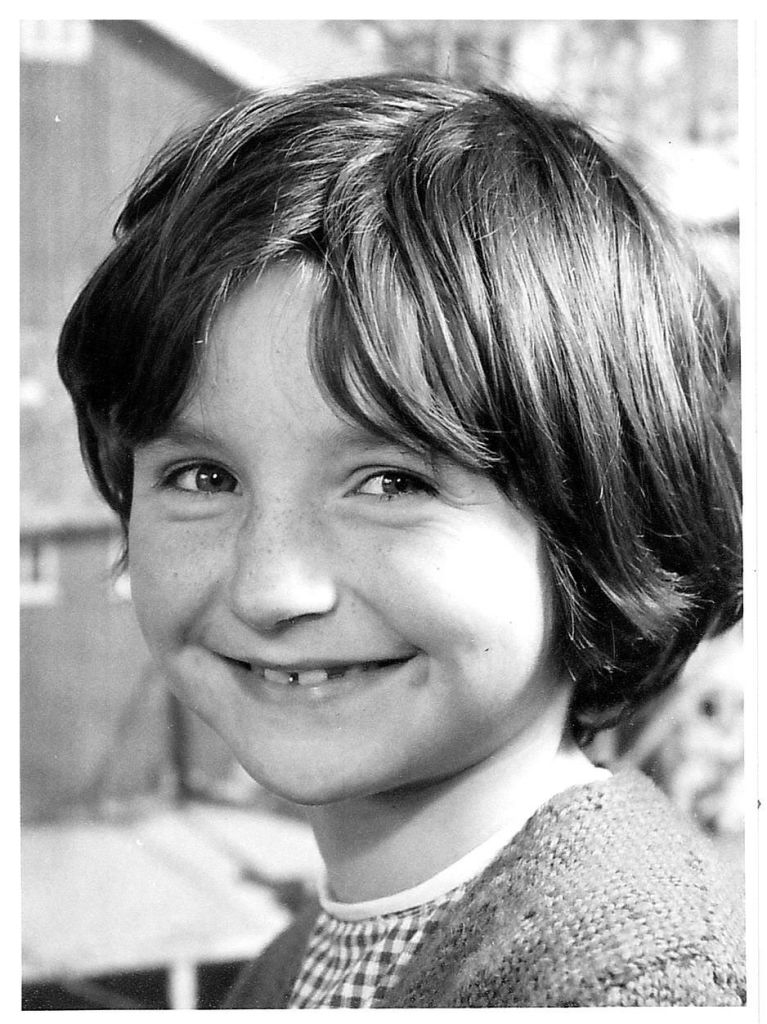
Alison grew up in a household on the outskirts of London, which became a place of solace for many refugees of the 1956 Hungarian Uprising and continued to be, for decades afterwards. Some of the refugees remained mysterious figures to the young Alison; voices late at night drifting up the stairs from the kitchen below.
But there were also the sudden family visits to ‘one of Daddy’s friends’, who would always have her Dad’s complete attention talking in Hungarian. Her Mum would be in the kitchen chatting to his wife. She would be expected to play with the children, who were often too upset to play, for reasons she never understood. Other Hungarians became part of the family, like nineteen year old Miki, who had to wear dark glasses all the time, because of torture damage to his eyes. Yet he never seemed happier than when he was building sandcastles with a young Alison at the seaside.
From these family memories along with her professional experience, Alison’s inspiration for her novel ‘Remember to Forget’ began to take shape. Finally putting Rebecca in a Greenwich pub, then letting her heroine loose, to tell her own story.
 Alison Miller Writer